
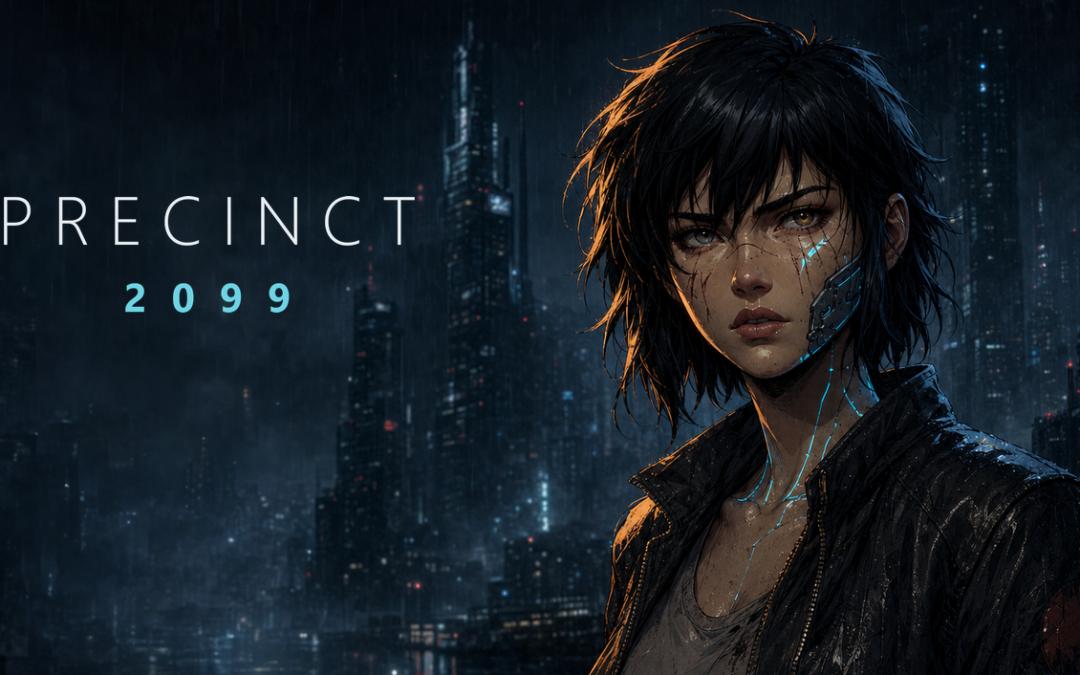
I publish a saga one episode at a time to approach a story spanning three, four, or six volumes through concrete releases. The plot grows, the characters demand room, and every decision creates several consequences. For The Dragon Hunter, I chose a complete story told through 24 ordered episodes.
This publishing model gives me control over the plot and turns every release into a practical test of craft. It also suits the nature of Precinct 2099, a universe moving forward at the same time as a video game, a novel, and a transmedia project. Each form has its own language. All of them share characters, dates, places, rules, and consequences.
In this project, every chapter also works as a narrative episode and an editorial release. The reader receives a unit with conflict, movement, and a conclusion. The wider story continues toward a larger resolution. Keeping that balance requires a map, discipline, and constant continuity checks.
How I publish a saga one episode at a time
Starting a long saga is a major undertaking. The excitement of the first day gets the work moving. Then come the months of writing, scenes that change position, promises that need a payoff, and supporting characters who begin asking for stories of their own. Scale can work against the writer when the story lacks a structure strong enough to carry it.
I began as a ghostwriter, and I work methodically. I use a compass when it helps, although my main tool is a map. Before I write an episode, I need to know who leads it, what that person wants, which obstacle stands in the way, what information changes hands, and where the characters will be at the end. The prose arrives with discoveries and surprises of its own. The map keeps the route visible when a strong scene tries to pull half the novel behind it.
When I publish a saga this way, the map becomes a chain of manageable objectives. Twenty-four episodes still make an ambitious project. I can revise one release, check its effects, and prepare the next with real information. The story moves forward through finished units that can be reviewed and verified.
Serial publishing has a long history
Serialization has been part of literary history for generations. Charles Dickens published many of his novels in monthly installments. The Charles Dickens Museum preserves original monthly parts of The Pickwick Papers, released between 1836 and 1837. That model imposed a length, a schedule, and a direct relationship with the audience’s anticipation.
Those writers worked with printers, magazines, and closing dates. Today we have eBooks, digital communities, newsletters, social platforms, and online reading. The narrative demand remains familiar: every release has to reward the reader’s time and keep the complete story alive.
A recurring release schedule forces decisions. What changes in this episode? Which promise receives a payoff? Which question stays open? Which character bears the cost? These questions apply to novels, television, comics, audio fiction, short films, and video games. The medium changes while a large part of the craft keeps the same working logic.
Every episode makes me complete something
An episode may end with a threat, a revelation, or a difficult decision. It still has to travel a meaningful distance before reaching that point. A character enters with an objective and leaves in a different situation. They may secure the evidence and lose an ally. They may solve a case and discover the person who manipulated it. The ending works when it grows from the pages that came before.
This principle helps me control pacing. I can find a release overloaded with explanation, a character missing for too long, or a clue with no consequence. I can also measure the movement among investigation, action, relationships, and worldbuilding. Structure becomes daily work instead of a distant outline.
The reading experience gains clarity when I publish a saga in ordered releases. Every episode has a title, a position, and a purpose. A reader entering the story can see where to begin and which step comes next. Amazon KDP allows an author to create a series before every title is complete, and a continuing storyline can use a defined reading order. That publishing framework becomes useful when the work was designed around numbered releases from the beginning.
Training for other forms of writing
Episodic writing develops skills that appear across many professional assignments. A television script needs purposeful scenes, season arcs, running-time limits, and production deadlines. A short film requires economy. An editorial commission requires a clear brief, a consistent voice, and a reliable delivery date. A video game adds decisions, states, routes, and dialogue that can respond to the player’s actions.
The writer learns to deliver material that another person can review, translate, lay out, program, or promote. The writer also learns how to receive notes while preserving the larger structure. When a revision affects two episodes, its cost stays visible. When it touches twenty, the map reveals the chain before the text changes.
Consistency carries more weight than waiting for a perfect day. A little writing, careful revision, and finished stages produce books. My calendar may change, while my responsibility to the story remains. Each workday should leave behind a decision, an improved scene, or a problem defined with precision.
A novel and a video game inside the same universe
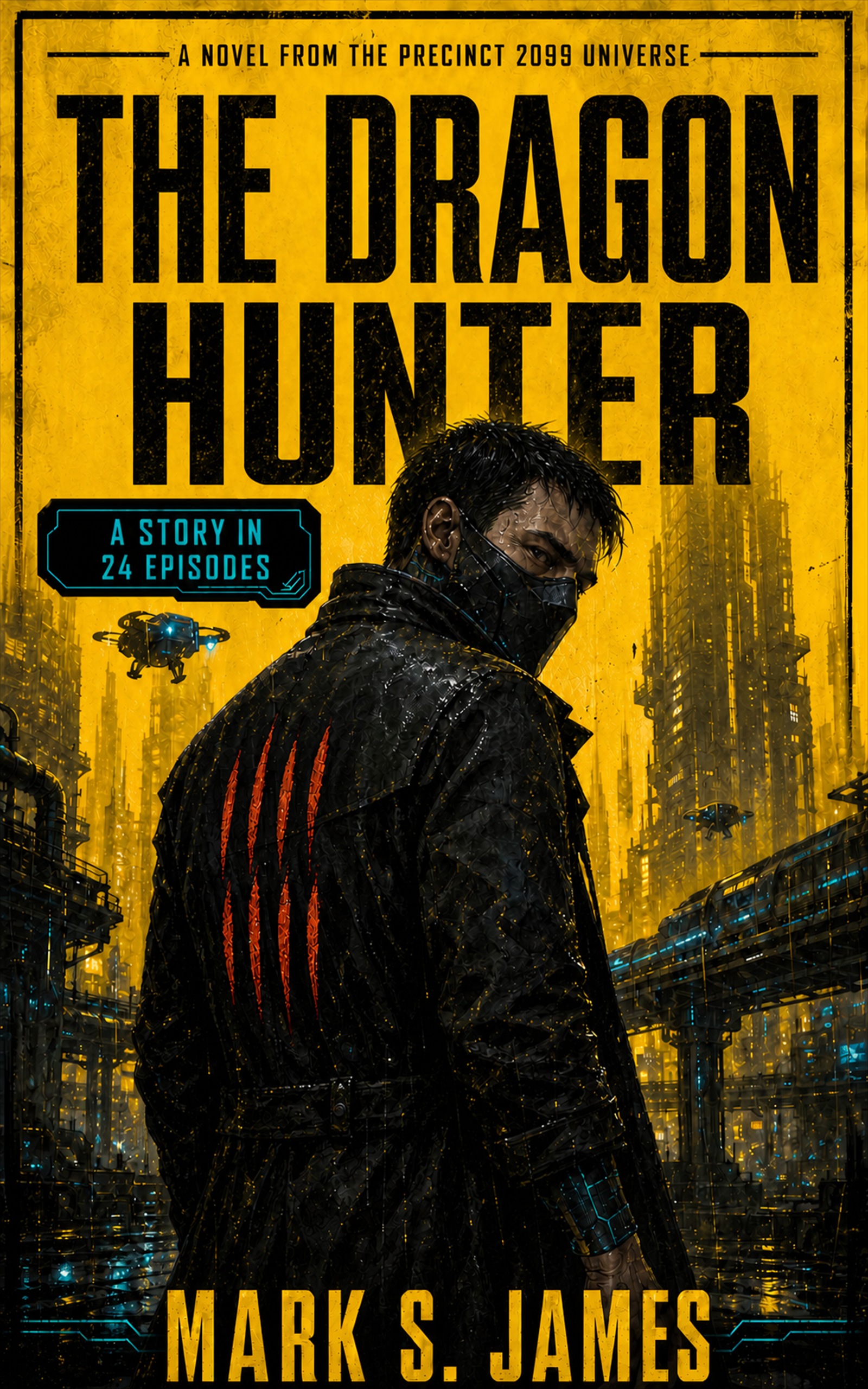
The Dragon Hunter belongs to Precinct 2099 and takes place seven years before Kade Katano’s case. The novel travels to Neo-Shanghai in 2092. Ada Katano, Kade’s mother, enters the story there, and the secret connecting Kade’s family history with the legend of the Dragon Hunter begins to open.
That connection demands coordination. Kade has to reach 2099 with the knowledge established for the beginning of the video game. The Hunter’s reputation, the corporate archives, and Ada’s choices need to leave compatible traces. An early revelation can drain a future scene of its force. A wrong date can break an entire relationship.
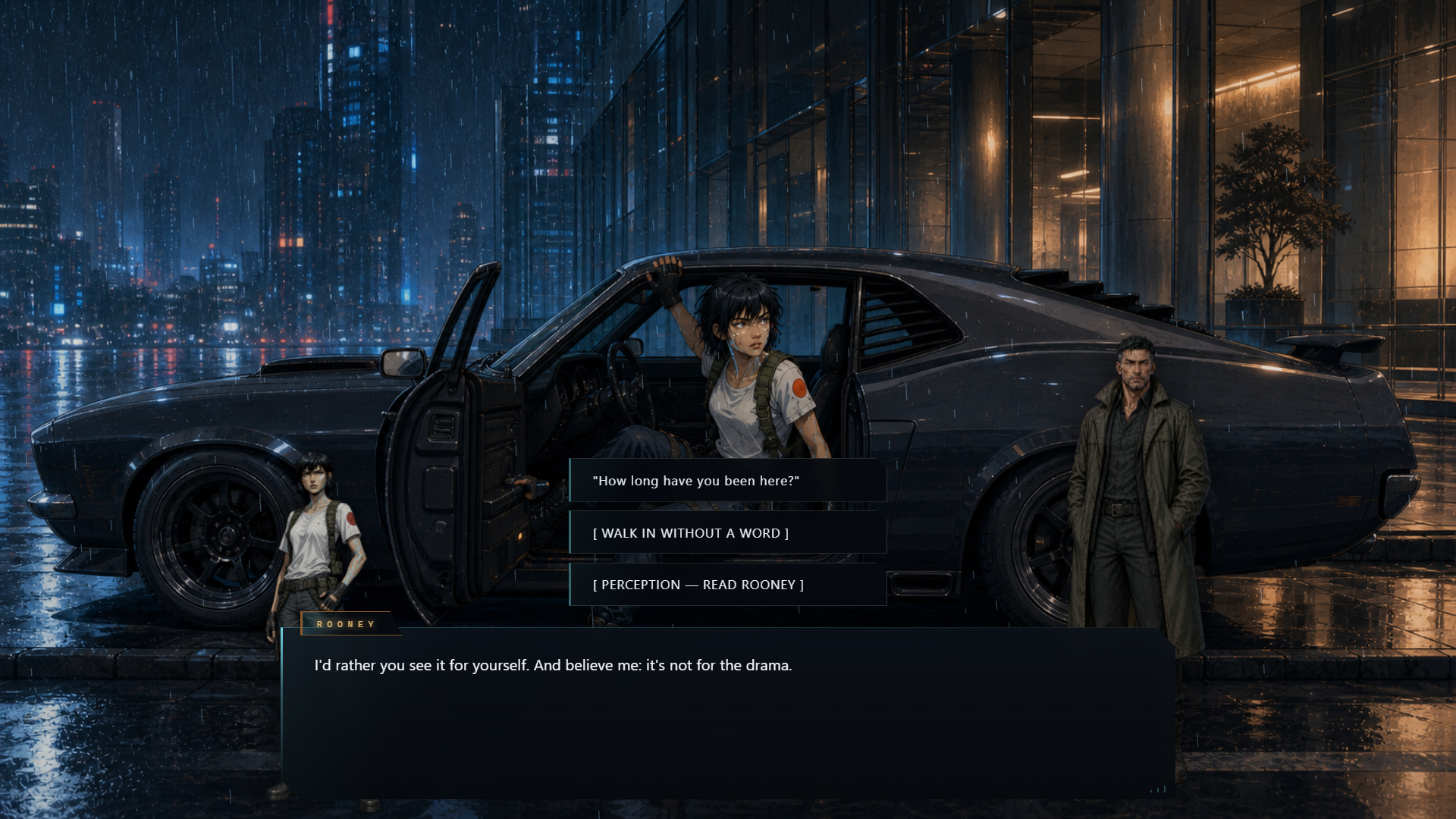
The video game gives the player room to choose, explore options, and reach different outcomes. The novel follows a line established by the author. Episodic work makes the link between those forms easier to manage: we review a defined segment, record its effects, and carry into the other project whatever truly belongs to the shared canon.

The reader gains a clearer relationship with the saga
Readers can enter the universe with a reasonable time commitment when I publish a saga in shorter releases. They can try the voice, the world, and the characters. Then they decide whether to continue. Numbering keeps the path visible, and the covers build a recognizable identity.
The time between episodes creates conversation. Readers discuss a decision, build theories, and return to an earlier clue. Across Steam, X, the author’s website, and the studio’s website, that conversation can accompany development of the video game. An article, an illustration, or a production note can expand the context without requiring an enormous campaign for every volume.
This relationship depends on trust. Every release needs careful editing, clear identification, and honest presentation. The episode number, language, cover, and series position have to agree. Readers deserve to know what they are buying and how much road still lies ahead.
The format has a cost
Serialization demands preparation. A weak episode stands exposed. A delay affects the reading rhythm. Every release repeats editing, cover production, metadata, layout, quality control, and communication. The production load can grow quickly when the project has two languages and several channels.
That is why I need a complete architecture and firm review gates. The 24-episode story is mapped before its sections are released. Each installment follows its own editorial process. The Spanish and English editions keep separate files and controls. This discipline protects the saga when the schedule becomes tight.
Collected volumes can come later
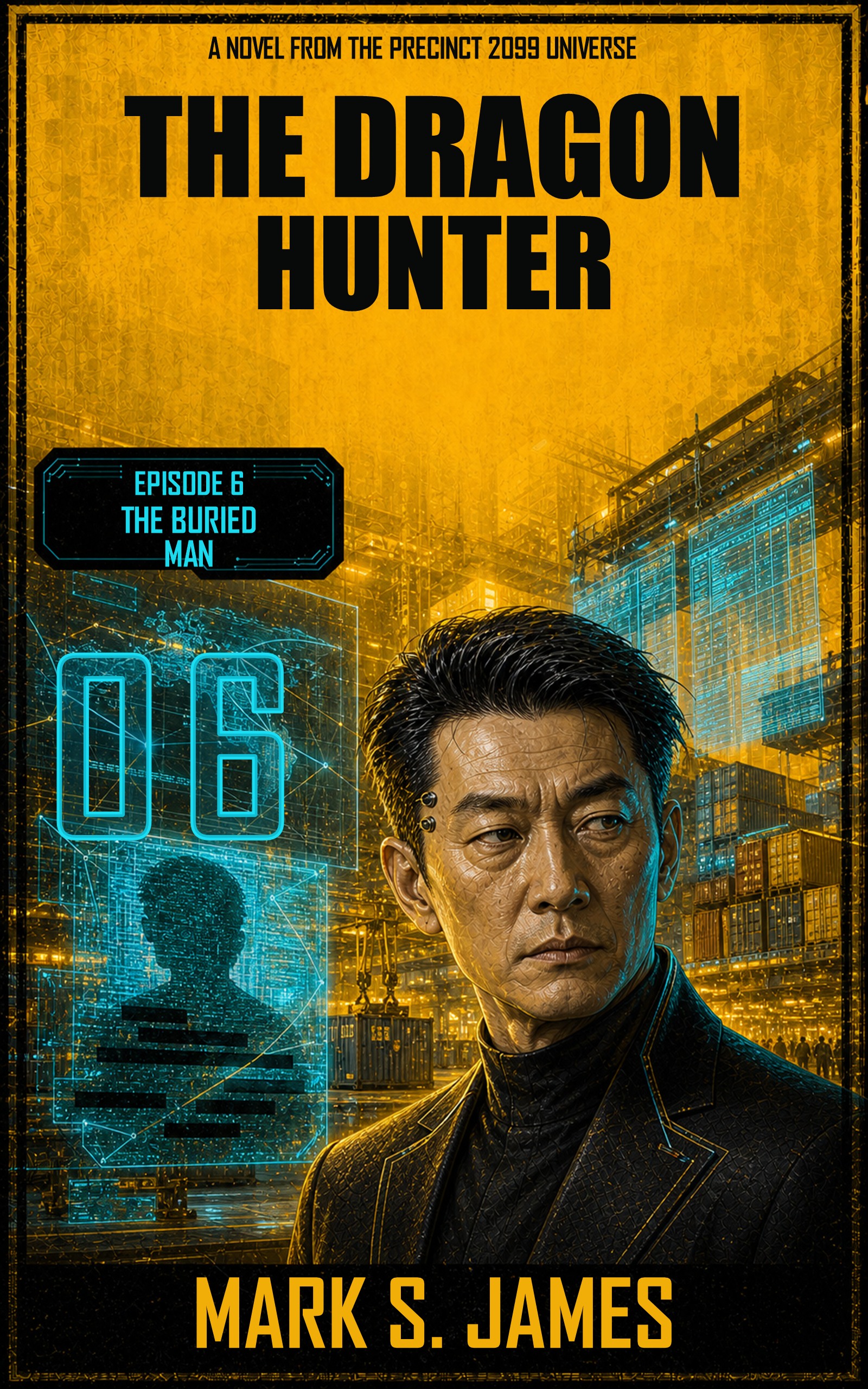
The episode is the original unit of this work. A future collection may bring several sections together when a clear editorial reason exists: a complete arc, a print edition, a finished translation, or a continuous reading experience. That volume will need to preserve the order, revise the transitions, and state exactly what it contains.
This lets me work on two scales. The first is close: today’s scene, the episode’s conflict, and the release the reader will receive. The second holds the complete journey: 24 episodes, four movements, and a planned connection with Precinct 2099.
Why I publish a saga one episode at a time
I publish a saga one episode at a time because the format requires precision from me. It helps me complete stories, develop transferable skills, and coordinate an intellectual property that lives across several media. It also turns a massive undertaking into a sequence of concrete commitments.
I still need patience, craft, and many hours of work. The map provides direction. Daily writing fills the territory. Every episode leaves another part of the city standing and opens the next door.
Mark S. James
Author of The Dragon Hunter, a serialized Precinct 2099 novel developed in collaboration with ThinkingLiteSoft.